Mountain Biking a Review of the Ecological Effects
Ecology Impacts of Mountain Biking Synopsis
By Jason Kahn
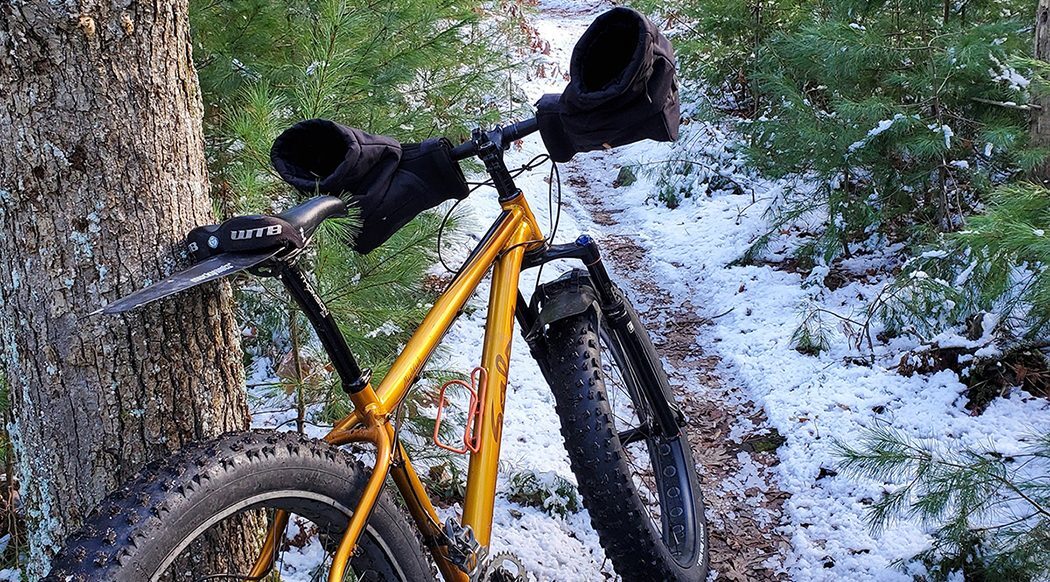
Featured Epitome: An mountain biking xc trail in Hampshire Canton, MA. (c) Jason Kahn
Co-ordinate to the online mount bicycle trail database, Trailforks, there are currently 283,020 miles of 213,921 trails in 109 countries. This listing generally includes approved trails on public and private lands. The numbers in this database almost certainly under-guess the bodily number of trails and trail mileage. It may be causeless that rogue or pirate trails may double the existing number of trails currently documented.
In that location are four types of mountain bike riding and therefore 4 types of trails. Each has unique characteristics and ecology impacts. These types of riding are: Cross Land(Xc), Freeride, Down Hill(DH) & Wheel Park/ Pump Track.
Cross Country trails are traditionally narrow, 12" to 24" in width, and meandering; the thought beingness that the trail is the goal. As such the trail density may exist quite high. For instance, 4 miles of trail can hands be constructed in 0.0078 square miles if desired. The other end of the 90 spectrum may have 1.v miles of trail spread over 1 square mile. The trail density is usually dependent on the size of the area available to the trail architect. The trails tend to cantankerous slopes with no more than a v-eight% slope and so as to be ridden in both directions for maximum variety. Trail edifice best practices, according to International Mountain Bike Association (IMBA) standards, allow for water to flow across trails instead of down the trail. Where trails reverse direction (switchbacks), they tend to accept h2o bars built into the trail earlier and afterward the switchback. This prohibits h2o pooling which creates muddied conditions and erodes the trail tread. XC style mountain wheel trails have like erosional impacts to hiking trails. In fact, some studies have found the erosion due to hiking trails more detrimental due to bad practices. Horse packing/equestrian trails are considered the virtually damaging.

A freeride trail in Bentonville, AR. (c) Jason Kahn
Freeride trails are a combination of XC and DH trail-building and riding. They are wider than Ninety trails, 3' to six'. They are meant to be ridden in 1 direction, down, and are therefore more than susceptible to erosion due to speed, braking, and landscape features such as slope. Erosion may be limited past armoring the trail, placing rocks in the trail tread in areas that tend to exist wet, or building bridges over these areas. Almost of these types of trails are on private land such as ski resorts that are trying to build a year-round tourist base. Another feature of Freeride trails is berms, these are banked turns meant to be taken at higher speeds. The berm is a congenital up plough usually constructed of down logs, rocks, and soil. These features exercise cut downwardly on braking and therefore erosion, merely the construction of these features is more intrusive on the landscape.
Down Hill(DH) trails are traditionally four'-eight' broad and meant to exist ridden in one management likewise. They are designed for heavier bikes and are usually highly technical in nature. Big rocks and roots typically punctuate these trails and can become erosional features. Downwards loma race courses are commonly mud-filled and tend to channel water as a result of the slope. Mud and rocks and roots are sought out past trail designers as technical features specifically for these types of trails. Down Hill trails are usually associated with ski resorts for the same reasons equally are Freeride trails.
Bicycle Park/ Pump Track trails vary in width from two' to 8'. They are usually built on apartment footing and are ordinarily constitute on municipal properties, in towns and cities, similar to skate parks. They tin can exist considered playgrounds for people on bikes. Nearly have elevated features made of woods or metallic and are completely synthetic in their pattern and construction. From the standpoint of environmental touch on, these are mostly a concern in terms of extraction of the resources, importantly wood and clay.

A wheel park in Bentonville, AR. (c) Jason Kahn
The effects of mountain biking trails on wildlife run the spectrum from beneficial to catastrophic. In some places, wildlife follow mountain bike trails, peculiarly where the mountain bike trails followed existing game trails. In winter, less try is needed by wild fauna to travel during heavy snow periods if they follow trails. Yet, this may favor some more opportunistic species, such as coyote, over shier species, like lynx. If the trails are groomed for winter riding, they tin be heavily traveled past deer and other browsers. Over again, though, in some places bike trails might exist seen equally bonny nuisances, if they favor opportunistic wildlife species over sensitive wild fauna species.
On the other end of the spectrum are bike on animal collisions which tin atomic number 82 to animal fatalities. Salamanders, frogs, snakes, chipmunks, squirrels, weasels, and rabbits take been run over past careless trail riders or riders traveling at high speed. Larger animals tin be reluctant to cross trails during daylight riding hours, but they are normally comfortable using and crossing trails at night. This is evident when studying footprints and scat left on trails by coyote, bear, fisher, and bobcat. On occasion, trail riders are injured past collisions with larger animals. A trail rider in Rennselaer County, NY was injured when he collided with a black comport. The bear swiftly recovered and fled the scene while the rider suffered minor abrasions and a aptitude front wheel.
The effects of mountain bike trails on soil and vegetation depend on the type of trail beingness built. XC trails usually consequence in minor soil compaction and initial increased soil erosion. Best practices can usually minimize soil erosion on any type of trail, but 90 trails are usually sustainable. In almost all trail building scenarios large trees 6" or larger are considered natural features, so the trail is routed around the tree for aesthetic purposes. Freeride and DH trails are ordinarily not every bit careful near vegetation avoidance. Higher speeds and the turning radius at those speeds may require some copse to exist removed. Best practice volition have trails reverse slope direction to scrub speed by a temporary uphill turn. This will allow for less vegetation to be removed.
A freeride trail in Bentonville, AR. (c) Jason Kahn
The new trend in DH and Freeride trail building is more than problematic. Machine congenital trails use small excavators, usually iv' wide, tracked machines with an articulating cab that controls a 12-18" wide bucket. These machines are less likely to avoid trees and roots. On trails that traverse slopes, these machines sever roots and remove larger amounts of soil which can atomic number 82 to increased erosion and topple copse that are leaning up or down slope due to the loss of a stabilizing root construction. These machines have been known to create 25 miles of trail in an eight-month menstruation. Manus-built trails, due to their more than carefully chosen line, may take up to four years to build a single trail of 12 miles.
The utilize of machines to build trails has for the most part been restricted to ski resorts and municipal properties. These trails are usually constructed by professional trail crews trained in best practices, but the size and slope of the trails usually make all-time practices difficult to adhere to.
The effects of mountain bike trails on water are like to those of hiking trails. Depending on the slope, climate, and vegetation there can be increased turbidity and/or siltation, if the trail's location is close to a stream. This increment in turbidity and siltation volition accept an adverse effect on h2o quality and breeding habitat for aquatic species, including trout and salmon. All-time practices would continue whatsoever trail from paralleling a stream within 25' of its banks. If a trail crosses a stream, best practices would mandate a bridge constructed of wood harvested from within the area and armored with rock on the entrance and exit from the bridge.

An xc trail in Bentonville, AR. (c) Jason Kahn
The newest threat to the environment from mountain cycle trails is the emountain bike (eMTB). These electrical powered pedal assistance bicycles are heavy, and they may attain faster speeds for longer periods of time than a traditional mount bike. Many conservationists take noted the increased distances a passenger may travel in a solar day with an eMTB. While this is truthful in nearly cases, it's fairly common for trail riders on traditional mountain bikes to cover thirty-60 miles a day which is similar for eMTB'due south. The real threat to the environment due to eMTB'due south is the influx of new trail users who wouldn't normally ride a mountain bike due to the difficulty. With this new influx comes the possibility that the riders of eMTB's may not have the ethic of nearly mountain bike riders. That ethic says: Do not ride trails in muddy weather. Do non skid into turns. Yield to uphill riders. Practice not harass wild fauna.
The new eMTB's, in fact, seem to become almost duplicate from motorbikes. Newer eMTB'south have motors with 750watts of ability and tin travel at speeds of 28 MPH. Information technology'due south as well touted that with modest adjustments to the motor, speeds of 46 mph are accessible. This has get such a contentious effect that the International Mountain Bike Association (IMBA) chose to oppose changes in the diction of the 1964 Wilderness Human action that would allow for mountain bikes in Wilderness areas for fear it would get the slippery gradient that allowed for whatsoever motorized vehicle to lawfully proceeds access to protected Wilderness areas. IMBA should support keeping all roadless areas free of mechanized recreation vehicles, but at to the lowest degree they took the correct position on upholding existing language in the Wilderness Act. In the age of Donald Trump and his appointed heads of the Section of Interior and Department of Agriculture, it's easy to connect the dots and see what are the motivations of the agitators who want to modify the Wilderness Act. Mount bikers should not fall in with that selfish lot.
Many states take already adopted rules, regulations, and restrictions on ebikes on public land. It will exist up to both conservationists and mountain bikers to encourage their state lawmakers to restrict these eMTB's from public lands. They should exist immune on public roads, merely not on foot trails or mount bike trails and never off-trail.
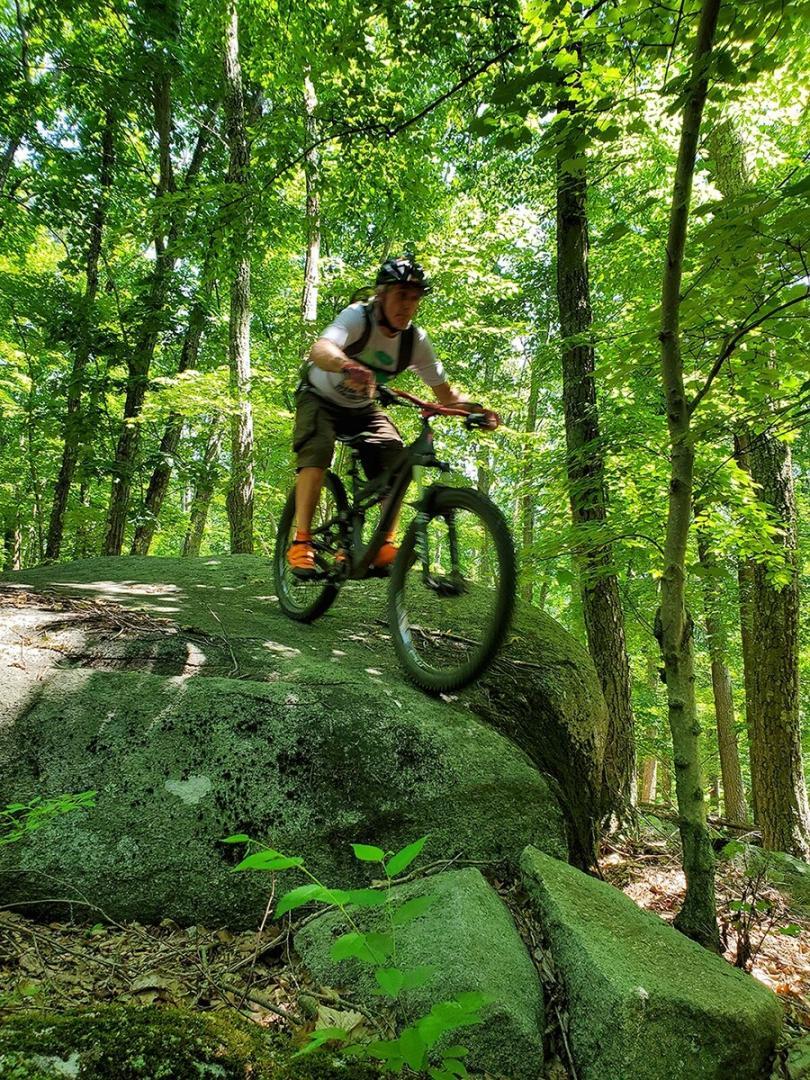
An 90 trail in Granby, CT. (c) Jason Kahn
As more cities and towns adopt mount biking as an economic engine to boost tourism and economic evolution, information technology should be noted that most of these cities and towns are concentrating the trail construction on privately owned and municipal lands. Trails are kept close to town where riders may ride right from the eye of boondocks and return to enjoy the food and amenities the boondocks has to offering. Examples of this model are Kingdom Trails of Shush, Vermont; and the city of Duluth, Minnesota, which claims to have 100 miles of trails within the city limits. Another instance of this model is the urban center of Bentonville, Arkansas, which claims almost 100 miles of trails that can exist ridden from the city and most of which are located in peoples' backyards and formerly misused metropolis-owned country that has been repurposed for mountain biking.
These models take chosen to leave open up public land reasonably untouched and concentrate most of the trails close to or within the town or city. In these places, a passenger can park his or her car and and so tin ride for days without having to drive anywhere. This idea is spreading to new trail evolution in about towns and cities that are trying to draw tourist dollars by becoming mountain wheel destinations. Kingdom Trails has a user fee that is used to help pay the property taxes of landowners that permit trails on their property. This cooperative clan has allowed landowners to keep their state intact instead of selling it to developers. This is benign to both the residents of Burke, VT and the wild fauna that live in and pass through the surface area. If this model of mount biking carefully full-bodied on private and municipal lands spreads, it could also lessen pressure level to open up public wildlands to mount bikes.

Jason Kahn recently joined The Rewilding Institute board of directors after retiring from serving as a bike mechanic after retiring from serving as an Earth Sciences teacher. Jason continues to bicycle regularly and is plotting a bicycle-supported wildways trek adjacent year with his rewilding friends.
Spread Rewilding Around the Globe!
Source: https://rewilding.org/environmental-impacts-of-mountain-biking-synopsis/
0 Response to "Mountain Biking a Review of the Ecological Effects"
ارسال یک نظر